
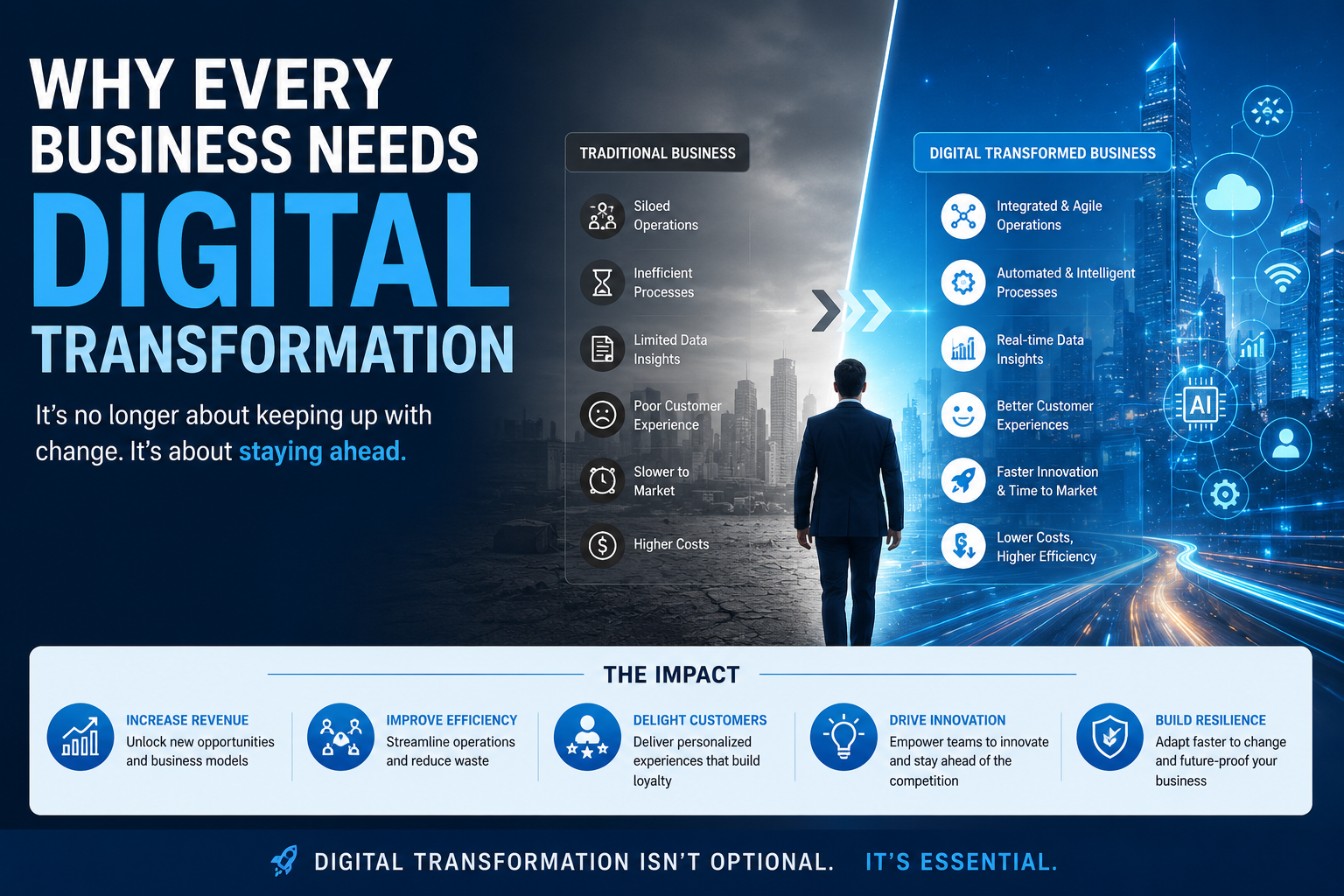


In today’s fast-changing business environment, digital transformation is no longer optional. Companies across every industry are adopting digital technologies to improve operations, deliver better customer experiences, and stay competitive in the market.
From automation and cloud computing to artificial intelligence and data analytics, digital transformation helps businesses adapt to changing consumer behavior and modern business demands. Organizations that fail to embrace digital innovation risk falling behind competitors that are faster, smarter, and more customer-focused.
This article explains why digital transformation matters and how it can help businesses achieve long-term success.
What Is Digital Transformation?

Digital transformation is the process of integrating digital technologies into all areas of a business. It changes how companies operate, communicate, and deliver value to customers.
Digital transformation involves:
- Automating manual processes
- Using cloud-based systems
- Improving online customer experiences
- Analyzing data for smarter decisions
- Adopting digital communication tools
It is not just about technology. It also involves changing business culture, workflows, and strategies to meet modern market expectations.
Why Digital Transformation Is Important

Businesses today operate in a highly competitive and technology-driven environment. Customers expect faster services, personalized experiences, and seamless digital interactions.
Digital transformation helps businesses:
- Increase efficiency
- Reduce operational costs
- Improve customer satisfaction
- Enhance decision-making
- Stay competitive in the digital economy
Companies that adopt digital strategies are better prepared for market changes and future growth opportunities.
Key Benefits of Digital Transformation
Improved Operational Efficiency

Digital tools automate repetitive tasks and reduce manual work. This improves productivity and allows employees to focus on higher-value activities.
Examples include:
- Automated billing systems
- CRM software
- Inventory management systems
- AI-powered customer support
Automation reduces errors, saves time, and improves overall business performance.
Better Customer Experience

Modern customers expect businesses to provide fast, personalized, and convenient services.
Digital transformation helps companies:
- Offer online support
- Provide mobile-friendly experiences
- Personalize recommendations
- Improve response times
Businesses that prioritize customer experience often achieve higher customer retention and brand loyalty.
Data-Driven Decision Making

Digital technologies allow businesses to collect and analyze real-time data.
With data analytics, businesses can:
- Understand customer behavior
- Identify market trends
- Improve marketing campaigns
- Make informed strategic decisions
Data-driven organizations are more agile and better equipped to respond to changing market conditions.
Increased Business Agility

Digital transformation enables businesses to adapt quickly to industry changes and customer demands.
Cloud computing and digital collaboration tools help teams:
- Work remotely
- Access information instantly
- Collaborate efficiently
- Scale operations faster
This flexibility is essential in today’s rapidly evolving business landscape.
Competitive Advantage

Businesses that adopt digital technologies can innovate faster and deliver better services than competitors.
Digital transformation helps companies:
- Launch products faster
- Improve efficiency
- Reach wider audiences
- Create new revenue streams
Organizations that delay digital adoption may struggle to compete in modern markets.
Common Technologies Used in Digital Transformation
Cloud Computing
Cloud platforms allow businesses to store data securely and access systems from anywhere.
Artificial Intelligence (AI)
AI helps automate processes, improve customer support, and analyze large amounts of data.
Big Data Analytics
Businesses use analytics tools to gain insights and improve decision-making.
Internet of Things (IoT)
IoT devices help companies monitor operations and collect real-time information.
Cybersecurity Solutions
As businesses become more digital, protecting sensitive data becomes increasingly important.
Challenges of Digital Transformation

While digital transformation offers many benefits, businesses may face several challenges.
Resistance to Change
Employees may be hesitant to adopt new technologies or workflows.
High Initial Investment
Implementing digital systems can require significant financial investment.
Cybersecurity Risks
Businesses must protect digital systems and customer data from cyber threats.
Lack of Digital Skills
Companies may need training programs to help employees adapt to new technologies.
Despite these challenges, the long-term benefits often outweigh the initial difficulties.
How Businesses Can Start Digital Transformation

Assess Current Processes
Identify outdated systems and areas that need improvement.
Set Clear Goals
Define what the business wants to achieve through digital transformation.
Invest in the Right Technology
Choose tools and platforms that align with business objectives.
Train Employees
Provide digital skills training to ensure successful adoption.
Focus on Customer Needs
Implement technologies that improve customer experience and satisfaction.
The Future of Digital Transformation

Digital transformation will continue to shape the future of business. Emerging technologies such as AI, machine learning, and automation will become increasingly important across industries.
Businesses that embrace innovation and digital strategies today will be better positioned for future success.
Companies that fail to evolve may struggle to meet changing customer expectations and market demands.
FAQs
What is digital transformation in business?
Digital transformation is the use of digital technologies to improve business operations, customer experience, and overall performance.
Why is digital transformation important?
It helps businesses increase efficiency, reduce costs, improve customer satisfaction, and remain competitive.
What are examples of digital transformation?
Examples include cloud computing, automation software, AI chatbots, e-commerce platforms, and data analytics systems.
Can small businesses benefit from digital transformation?
Yes. Small businesses can improve productivity, customer engagement, and growth opportunities through digital tools.
Conclusion
Digital transformation is essential for businesses that want to grow, innovate, and remain competitive in the modern economy. By adopting digital technologies, organizations can improve efficiency, deliver better customer experiences, and make smarter business decisions.
As technology continues to evolve, businesses that embrace digital transformation will be better prepared to succeed in the future.
Start your digital transformation journey today to build a stronger, smarter, and more resilient business.